The NHS leaflet said "eat less sugar" and mentioned nothing about egusi soup, jollof rice, pounded yam, or the malt drink you have with every meal. The prevention programme had never heard of your kitchen. Every piece of guidance was designed for someone else's plate. You just chose the method that was designed for yours — culturally specific, practically applied, alongside your GP's care.
Your food. Your culture. Your health. Finally addressed together.
🌿 "The warning was real. I took it seriously. I attended the programme and followed the leaflet and found guidance that wasn't designed for my kitchen. Mama Nneka's method fills the gap the clinical system doesn't have time for: how to apply blood sugar support principles to the African foods I already cook, in the portions I already prepare, at the family table I already share. My culture is not the obstacle. Knowing how to navigate it is the method."
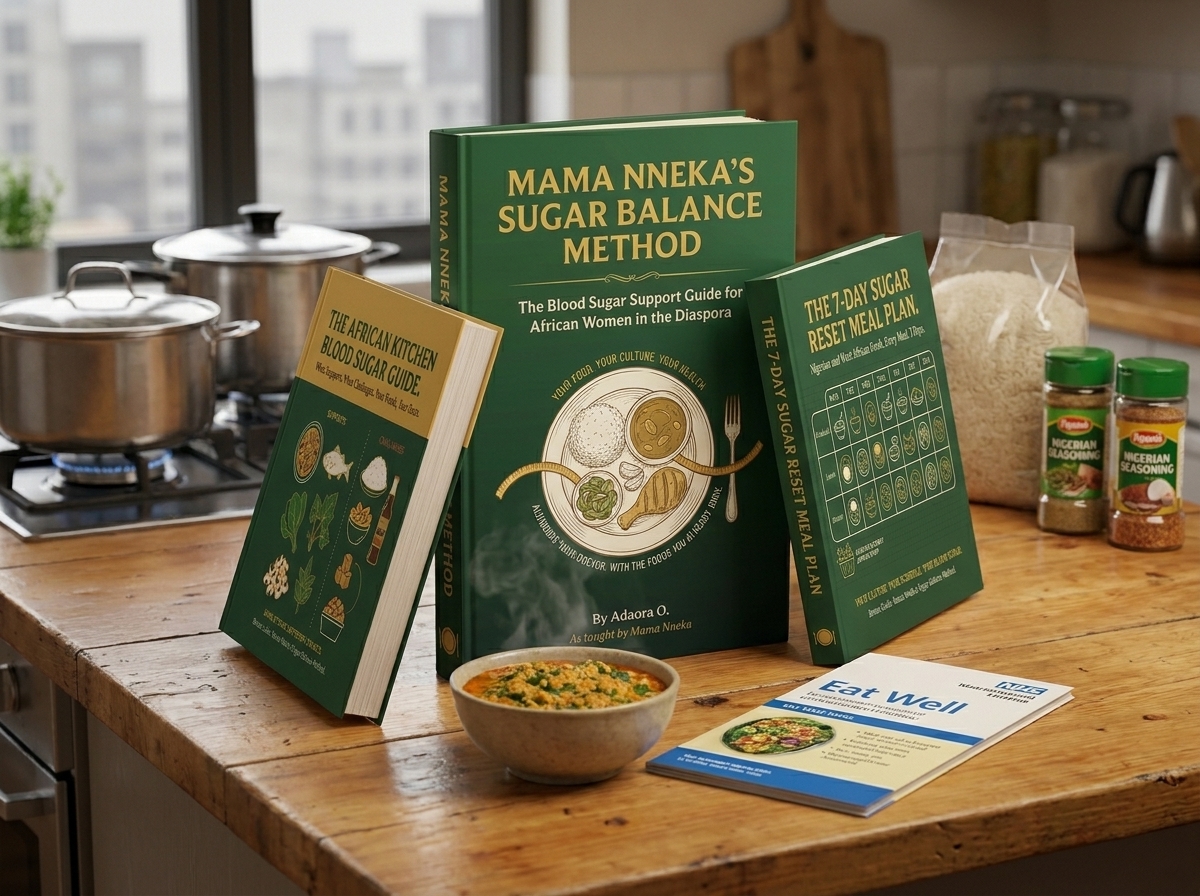
Your Complete Method Is Ready
Click the button below to download the full method and both guides instantly.
Download Your Guides Now🌿 Here's What You Got
The complete 3-part system: African kitchen blood sugar reset (which West African foods support healthy blood sugar vs which challenge it), portion and pairing method (how specific combinations change the glucose impact of carbohydrate staples), and daily support protocol (meal timing and movement designed for a diaspora working woman's schedule). Alongside your GP's care.
Food-by-food reference for Nigerian and West African foods: what supports, what challenges, how preparation methods change the impact. Egusi, jollof, pounded yam, palm oil, plantain, suya, malt drinks — all addressed. Print it for your kitchen.
7 days of complete meals using Nigerian and West African foods with the portion and pairing method applied. Breakfast, lunch, dinner, and snacks. Ingredients available in African shops in the UK, US, and Canada. Designed for a working woman's schedule.
Your First 48 Hours
Download Everything Now
Tap the button above. Save all 3 files. You'll reference the food guide and meal plan alongside the main method throughout the coming weeks.
Read the African Kitchen Blood Sugar Guide Tonight (Bonus #1)
Start here FIRST. Open Bonus #1 and check the foods you ate today against the two columns. Most women find 3-4 daily habits that are specifically challenging their blood sugar — a sweetened malt drink with every meal, large rice portions without protein pairing, or a specific cooking method they use regularly. Identifying these tonight means tomorrow's meals begin supporting your blood sugar instead of spiking it. The food guide alone can produce measurable changes in post-meal glucose response within the first week when a CGM is in use.
Review the 7-Day Meal Plan (Bonus #2)
Open the meal plan and check what's needed for Day 1. All ingredients are available at African shops. The plan shows exactly how the portion and pairing method applies at every meal — without cooking separate "blood sugar food." The same food your family eats, structured differently.
Read the Main Method
The main guide explains the full 3-part system in detail: the African kitchen reset, the portion and pairing principles, and the daily support protocol. Read it cover to cover before starting the 7-day plan so you understand WHY the adjustments work, not just WHAT to do. When you understand the reasoning, you can apply it at every meal, not just the ones in the plan.
Continue All GP Appointments and Prescribed Medication
This method works alongside your clinical care. Your next HbA1c test is the most important metric. Continue all scheduled blood tests and any prescribed medication without change. The method adds the cultural dietary layer the clinical system doesn't have time to provide. The GP provides the medical monitoring. Both together give you the full picture.
Don't Judge Progress by the Scale
HbA1c is a 3-month average. You won't see it change at a weekly weigh-in. Instead, track: Are post-meal CGM spikes (if you use one) softening? Is the 2pm energy crash reducing? Are sugar cravings becoming less insistent? These are the early signals that your blood sugar environment is shifting. The HbA1c confirms it at your next appointment.
🌿 What to Expect
⚡ Do This Right Now
Open the African Kitchen Blood Sugar Guide (Bonus #1) and go to Page 2: "The Malt Drink Problem."
Sweetened malt drinks — including popular brands widely consumed in Nigerian and West African diaspora communities — contain significant quantities of added sugar. A 330ml can of a popular malt drink contains approximately 39g of sugar, which is close to the entire daily recommended sugar intake of 30g for adults set by the NHS. Many African diaspora women consume one with every meal as a cultural habit, without recognising it as one of the most significant blood sugar spikes in their daily routine. Identifying and replacing this single habit can produce measurable improvement in post-meal glucose response within days — visible on a CGM within the first week.
"Your food culture is not the enemy. Knowing how to navigate it IS the method."
🌿 21-Day Conditional Guarantee
Apply the method alongside your GP's guidance for 21 days. If you don't notice meaningful improvement in how you manage your blood sugar through food, full refund. You keep both guides regardless.
Need Help?
Questions about the food guide, the pairing method, the meal plan, or anything at all? We understand the diaspora kitchen. We've navigated it ourselves.